
Key Takeaways from CMS’ WCMSA Fiscal Year Statistics for 2022-2026

by M. Heberling
It is that time of year again – the Centers for Medicare & Medicaid Services (CMS) has released the latest Workers’ Compensation Medicare Set-Aside (WCMSA) Fiscal Year Statistics: 2022-2026.
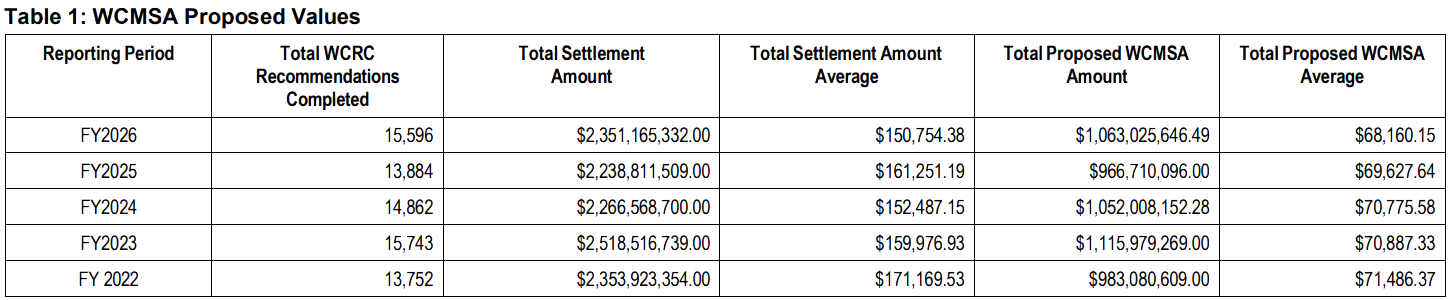
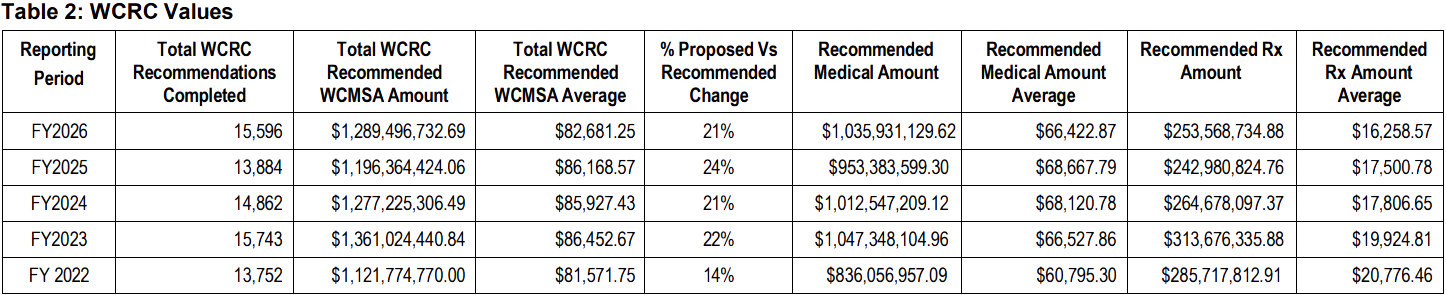
This annual report provides an opportunity to review data on the CMS review/approval process and highlight interesting, emerging trends. CMS provides data on proposed WCMSAs (Table 1), as well as data on what was ultimately recommended and approved by the Workers’ Compensation Review Contractor (WCRC) (Table 2).
Exploring Data Trends
Some highlights from this year’s data include:
-
-
- The total cases reviewed by CMS reversed a two-year decline, with CMS reviewing 1,712 more cases than in 2025. There was a similar increase in cases reviewed from 2022 to 2023 (1,991) before declining over the next two years (2024-2025). CMS still completed about 147 fewer reviews in the current fiscal year than in 2023.
- The average total settlement amount for proposed WCMSAs was $150,754.38, which is the lowest average in the last five years.
- The average proposed WCMSA amount was $68,160.15, which also is the lowest average in the last five years.
- The average recommended WCMSA amount was $82,681.25, which represents an increase of 21% from the proposed WCMSA amount. The increase from proposed WCMSA amount to recommended WCMSA has been between 21%-24% over the last four years.
- The average Rx amount recommended by CMS has continued to decrease. This is a five-year long trend with every year since 2022 having a lower average Rx amount than the prior year.
-
The increase in cases reviewed by CMS may relate to the changes in Section 111 TPOC reporting that occurred in April 2025. CMS began requiring the MSA amount to be reported along with the TPOC amount for workers’ compensation settlements involving Medicare beneficiaries. Despite CMS repeatedly confirming that the submission process is voluntary, these new reporting requirements may have altered risk management strategies for Responsible Reporting Entities (RREs). However, I would caution on reading too much into this as we noted an even greater increase in cases reviewed from 2022 to 2023. CMS asserted at that time they could not attribute the increase to a single factor. It should also be noted however that CMS stopped reviewing any zero-dollar ($0) WCMSAs in July 2025. This presumably should have resulted in fewer cases being reviewed, which the data shows did not occur. This is a notable trend that we will continue to monitor over the next year.
Addressing the TPOC Reporting Changes
Over the past year, we have written blogs that illustrate CMS is focused on post-settlement compliance, with an emphasis on beneficiary responsibilities and proper administration of WCMSA funds. As recently as last month at the 2026 MSPN Annual Conference, CMS has continued to stress that engaging with their approval process is and has always been completely voluntary regardless of the amount of the MSA and settlement. The very first section of the WCMSA Reference Guide states this fact plainly. Therefore, changes in TPOC reporting requirements should not necessarily affect the decision whether to engage in this voluntary process. Fears associated with new reporting requirements could also be addressed by ensuring resources and assistance are in place for appropriate administration of the reported MSA amount.
Based on the last four years of data, submitting to CMS will likely result in the proposed MSA amount increasing by between 21-24%. On certain files, a 20+percentage increase can be a substantial amount of money that significantly overfunds future medical needs. CMS typically takes a very expansive view of treatment that may possibly occur rather than utilizing an evidence-based medicine approach to identify the most probable outcomes. Moreover, they have system limitations that prevent appropriate, reasonable allocations which include being locked into AWP medication pricing, monthly refills of medications for the life expectancy, and set patterns of follow-up frequency for the full life expectancy. None of which may be reasonable based on the facts of each individual case.
It is worth nothing that data obtained through our Certified, non-submit program, demonstrates that the vast majority of the time MSAs are not being fully exhausted. Utilizing a Certified MSA often helps reporting entities settle cases faster without relying on an uncertain outcome associated with the voluntary CMS review process.
If you have any questions about these statistics or would like to discuss Medicare Set-Aside programs further, please reach out to our Settlement Consulting team at [email protected].